


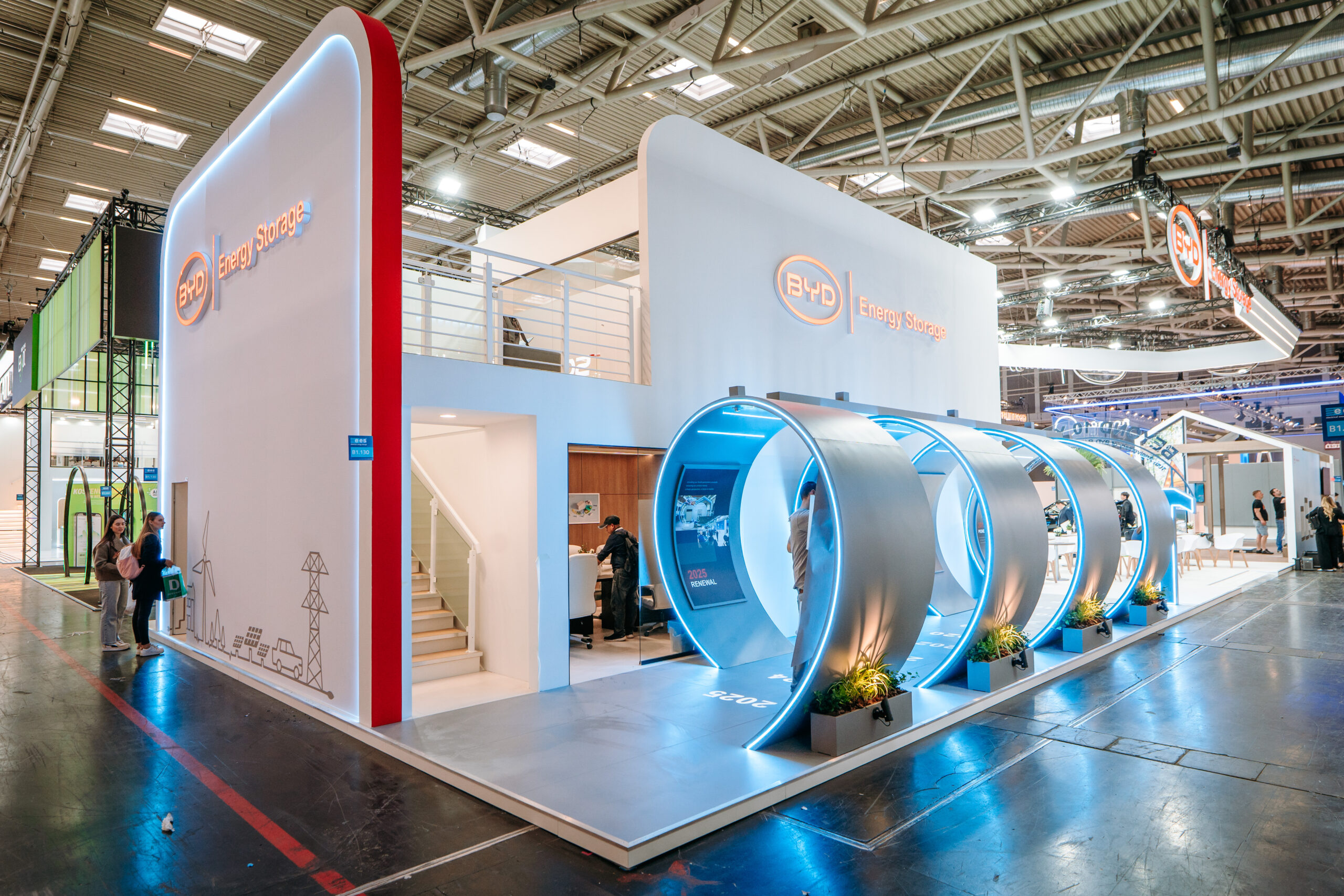
Modern stands – what are the current trends?
A well-designed stand not only attracts attention but, above all, builds relationships and truly supports sales.
Modern trade fair stands are much more than just a space to showcase a company’s offerings. They have become an integral element of a marketing strategy, combining promotional, sales, and image-building functions. Their mission is not only to attract visitors’ attention but, above all, to create a memorable experience that translates into long-term business relationships.
A modern stand should, above all, stand out with a coherent and distinctive design. Aesthetics play a key role here – carefully selected colors, materials, and lighting make a brand recognizable from afar. Skillful use of space is also crucial. A stand shouldn’t be a random collection of elements – it should be designed functionally, with clear divisions into zones for product presentation, business discussions, and visitors’ relaxation.
Technology is playing an increasingly important role in trade fair stand design. Interactive screens, multimedia presentations, and solutions using augmented and virtual reality allow for attractive and engaging presentations. Thanks to them, the visitor is no longer just a passive observer, but an active participant in the experience. It is interactivity that makes the stand a place to return to.
Building relationships with visitors is also a key element of modern stands. Organizing demonstrations, presentations, or product tests allows for direct contact with customers and better demonstrates the value of the solutions offered. At the same time, digital tools such as QR codes and mobile apps are increasingly being used to collect contact information, enabling continued communication after the event.
In recent years, new trends in trade show stand design have become evident. One of these is minimalism, which emphasizes simplicity and clarity of message. Instead of an overabundance of stimuli, an orderly space emerges, where each element has its own purpose. At the same time, the trend of using immersive technologies such as VR and AR, which allow for the creation of realistic and engaging product presentations, is growing.
The ecological aspect is also important. More and more companies are choosing to use environmentally friendly materials and modular, reusable structures. This approach not only reduces costs but also aligns with growing customer expectations regarding corporate social responsibility.
Another development is sensory marketing, which involves appealing to the various senses of the audience. Carefully selected lighting, sound, and even scent can significantly impact brand perception and enhance brand recall. Experience personalization is also becoming increasingly common – data analysis allows for tailored communication to specific visitor needs.
In summary, modern trade fair stands are spaces designed with the audience in mind – functional, aesthetic, and interactive. Their role extends far beyond the mere presentation of products, becoming a tool for building relationships, emotions, and engagement. In a world where first impressions and user experience matter, a well-designed stand can become one of the most crucial elements of a company’s success at trade fairs.

 tel: +48/ 61/ 872 60 11
 Bobrownicka 1c St.