


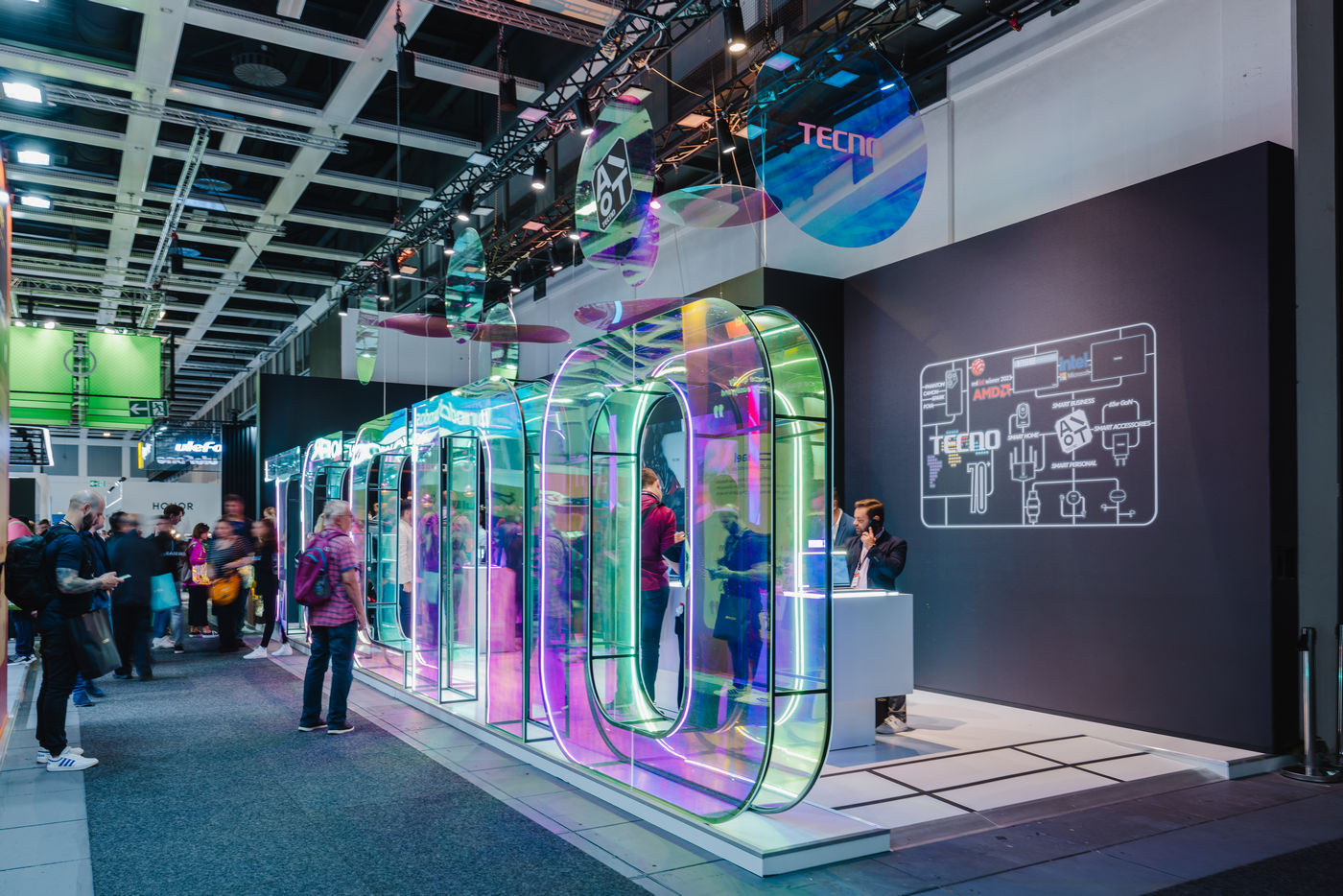
What should you pay attention to when designing a stand?
Trade show booth design is a crucial element of a company’s marketing strategy, aimed at effectively presenting its offerings and building a brand image in direct contact with the audience. A booth serves representative, informative, and sales purposes, so its design and spatial organization should be guided by clearly defined business and communication goals.
The fundamental premise of the design is to create a space that clearly and visually reflects the brand’s identity. This means maintaining consistency with the company’s visual identity, including color schemes, typography, and graphic elements. This ensures the booth is recognizable and strengthens brand awareness among visitors. At the same time, its design should stand out from other trade show exhibits, attracting the attention of potential customers and encouraging them to engage with you.
Visual appeal is also crucial, resulting from a harmonious combination of form, materials, and lighting. However, the design should not be overloaded – too many stimuli can hinder the message. Maintaining a balance between aesthetics and clarity is crucial, ensuring that visitors can quickly navigate the offerings and functions of each stand area.
The functionality of the space is equally important, and must take into account the needs of both visitors and staff. The layout should ensure free flow of people and intuitive movement between individual areas, such as the exhibition space, business meeting area, and technical support. Ergonomic solutions directly impact user comfort and the effectiveness of sales and promotional activities.
The stand design must also be adapted to the specific technical conditions of the exhibition venue. This includes both the size and shape of the exhibition space and the availability of utilities, such as power supply and IT infrastructure. It is also essential to consider the trade fair organizer’s guidelines and safety regulations, which determine possible structural solutions.
Another important consideration is the mobility and flexibility of the structure. The stand should be designed to enable multiple uses during various events. The use of modular solutions allows for the customization of the stand to various surfaces and facilitates transport and assembly, which is crucial from an organizational and economic perspective.
The quality of the materials used and the durability of the structure are also crucial. The stand should be resistant to mechanical damage and intensive use, while maintaining a high aesthetic standard. Careful workmanship influences the perception of a brand as professional and credible.
Contemporary stand designs increasingly incorporate interactive elements that engage visitors and enhance the attractiveness of the display. These can include multimedia presentations, touchscreens, or product demonstrations, which allow the audience to actively participate in the brand experience.
Sustainability is also becoming increasingly important. Stand design incorporates the use of reusable materials, waste reduction, and energy-efficient solutions. This approach not only aligns with current trends but also positively impacts the company’s image as a socially responsible company.
In summary, a trade show stand design should constitute a cohesive whole, combining aesthetic, functional, and marketing values. Its effectiveness is determined by the skillful adaptation of the form to business goals and display conditions, as well as the ability to attract the attention and engage the recipient.

 tel: +48/ 61/ 872 60 11
 Bobrownicka 1c St.